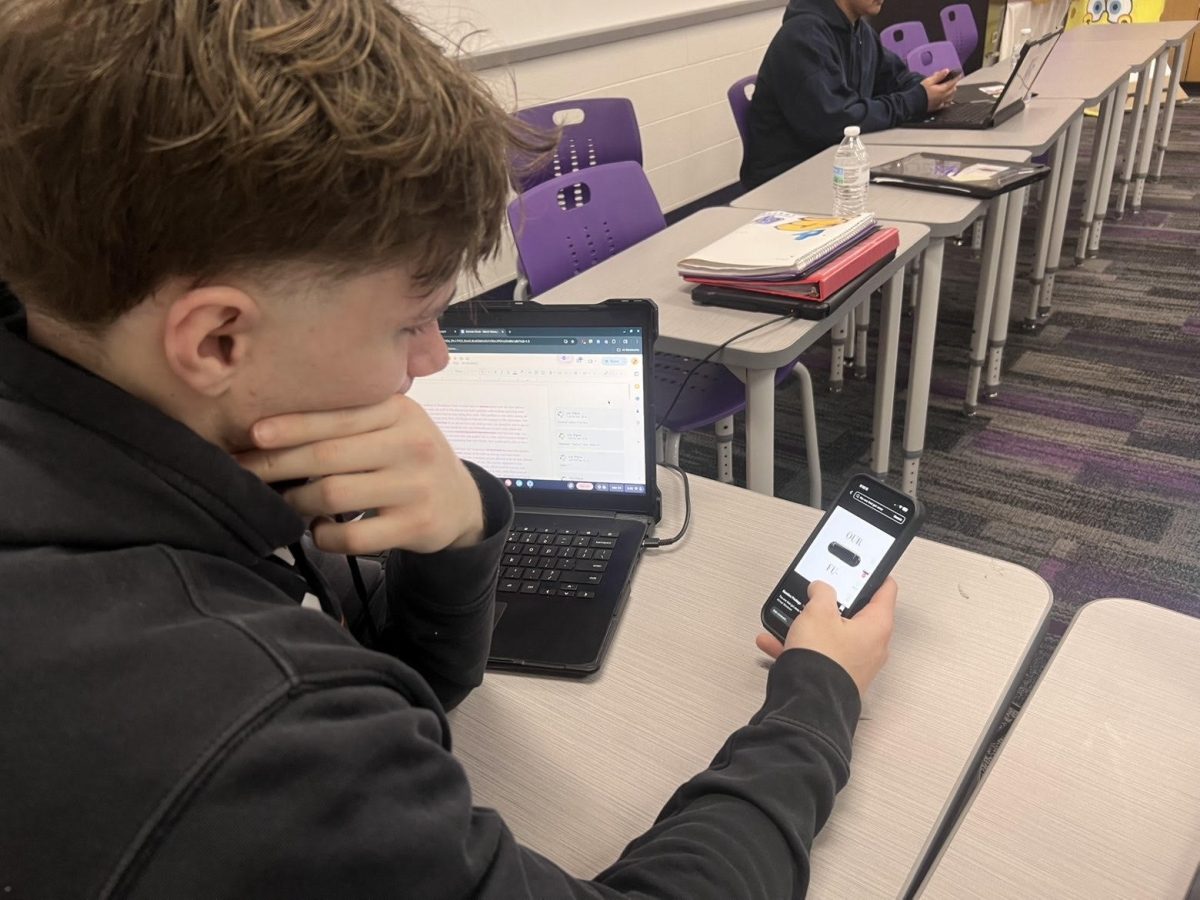
There has been an ongoing pattern of social media addiction in teens, where they tend to feel trapped in a loop where each new headline seems important. Doomscrolling, the term for endlessly consuming content online, has become a daily part of most teenagers’ routines. This is meant to keep us informed, but it always ends up triggering anxiety in most cases. It shifts our perception and sometimes makes us believe things that aren’t true. This cycle is very easy to fall into, especially when social media platforms are designed to keep us engaged regardless.
The way doomscrolling has evolved over the years is bigger evidence that it’s getting worse. Back before 2010, social media was still growing, and without smartphones in everyone’s hands, people weren’t as focused on news updates or social media in general. By the time platforms like Twitter and Instagram became popular, real information began to mix with entertainment. Between 2016 and 2019, addictive features and constant trends kept users interested without the need to click or search. Once different algorithms began to tailor people’s feeds, it became a distinctive part of their lives. The pandemic year of 2020 brought doomscrolling at an all-time high. When classrooms shut down globally, and people were stuck inside, the phone became a device to learn on and to cure boredom. Since 2021, platforms like TikTok have become even more popular than before.
In an attempt to get different perspectives on this topic, students were interviewed on whether or not they think this has affected their everyday lives. Damien Dixon says, “Yes, it has affected me, because whenever I have free time, my first instinct is to go and scroll on TikTok.” Mikayla Hill says, “Yes, I feel like it has affected my daily life because whenever there’s nothing to do, I just get to scrolling for an uncontrollable amount of time to the point where I don’t realize how much time has passed”. Some long-term and short term affects include headaches, muscle and neck tension, low appetite, lower attention span, and difficulty sleeping. According to a study from Western University https://news.westernu.ca/2025/05/passive-scrolling/, “Approximately 45 percent of study participants, without any prior mental health conditions, reported heightened anxiety in the clinical range”. This shows how much of an effect doomscrolling genuinely has on teens all over the world.